

FOREST TRANSFORMATION
Current conditions are too dense and too dry to withstand a wildfire. Climate change is making this situation worse. We must transform the forest to better withstand the future wildfire that will come. Thinning, and limbing, for fuel reduction is a good start, but transforming the forest in other ways to better withstand climate change is key.

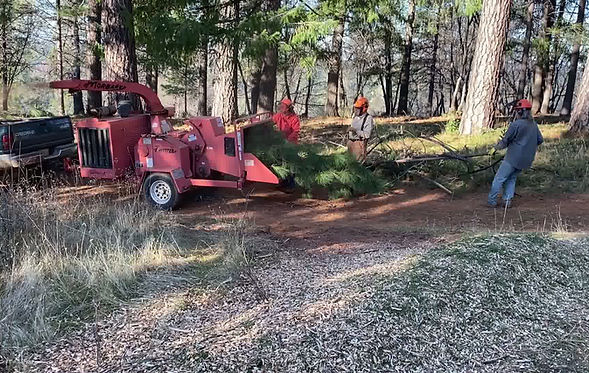
Chipping rather than burning has its advantages in some areas. Retention of nutrients in the ground and for use in the gardens is one example.
Promoting carbon sequestration: As climate change weakens the existing conifers, we seek to transform low Sierra mixed conifer dominated forests to a more diverse mix of drought and heat resilient oaks, conifers, and under-story plants in order to help it respond to climate heating and drying. To do this we are aggressively thinning existing forests; so each tree has access to more soil moisture; and retaining more climate resilient species. We are also planting more climate resilient trees and under-story species from lower elevations outside of our local area using a process called "assisted migration". We are just beginning trials in this area and intend to expand our research and field trials in the future.

Brush cutting pictured here creates lots of dangerous flash fuel for the next wildfire. It can be moved to areas for chipping later, or the material can be pile burned. In some cases depending on proximity and terrain, the material may be cut and left on the ground in small and low to the ground pieces to decompose on its own.
Lop & Drop

The thinning and trimming of shrubs, trees, and low branches, leaves a lot of burnable fuel for the next wildfire. When burning or chipping is not practical, we reduce the fire risk by cutting potential flash fuel into small sections and keeping it low to the ground so it will decompose more quickly.
When the next wildfire comes through this area, we want fuel conditions resulting in low fire intensity and not a threat to mature trees. (Towards the end of this video in the upper background we glimpse the next whole tree on the ground to be sectioned up or "lopped and dropped".)